8 High-Touch Surfaces Your Cleaning Crew Might Be Missing
Maintaining a clean workplace goes beyond visible floors and countertops. High-touch surfaces in commercial spaces are handled by dozens, sometimes hundreds, of people daily. Even the most professional cleaning crew can miss certain areas, and in a busy facility, those gaps add up fast. These overlooked high-touch surfaces can contribute to increased sick days, decreased productivity, and frustrated employees. By identifying commonly missed touch points, you can strengthen your commercial cleaning strategy and create a healthier, safer environment for your staff and visitors.
1. Light Switches and Dimmer Controls
Light switches sit in plain sight, yet they can be easy to miss during daily commercial cleaning. They rarely look dirty, so cleaning crews may pass them while working on desks, floors, glass, and trash. In offices, labs, classrooms, exam rooms, and senior living spaces, these switches can be touched dozens of times each day.
Good light-switch cleaning starts with a clear checklist. Your cleaning team should wipe switch plates, toggle switches, dimmer switches, and nearby wall areas that collect fingerprints.
In commercial buildings where multiple groups cycle through the same rooms, such as training rooms, nurse stations, shared offices, and campus facilities, proper touch point disinfection needs to be on your checklist and not left to chance. It adds minimal time to a route and makes a measurable difference in touch point hygiene.
2. Elevator Buttons and Panels
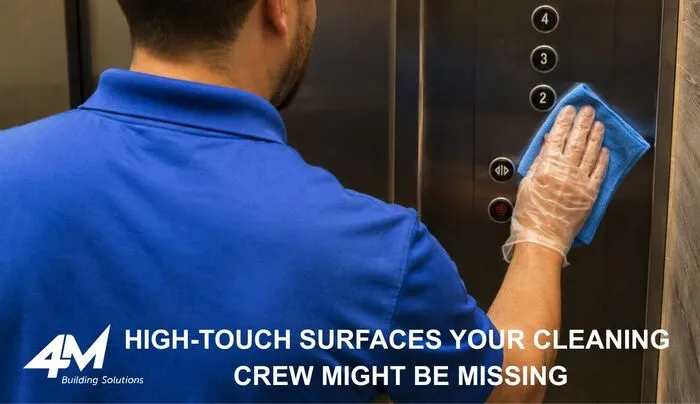
Elevators carry a steady flow of people in multi-story buildings like hospitals, hotels, and office parks. Cab walls and floors may look clean after a routine pass, but button panels can be missed. The small size of each button can make the task seem minor, but the touch volume is high.
Proper elevator button cleaning includes interior floor buttons, open and close buttons, emergency call buttons, and exterior hall call panels. Your team should also clean nearby metal trim, since people may press around buttons with knuckles, keys, sleeves, or gloved hands.
In healthcare and corporate buildings, these high-traffic areas deserve set cleaning times during the day, not just at night. This step will help you boost your commercial building’s hygiene and visitor trust.
3. Door Handles, Push Plates, and Crash Bars
Doors create one of the clearest contact paths in a building. Every person entering or exiting touches a handle, push plate, crash bar, pull, or frame. Main entrances get attention because fingerprints are visible. However, interior doors can receive less care, even though they connect restrooms, stairwells, breakrooms, storage rooms, and meeting spaces.
Your door handle disinfection plan should cover both public and staff-only doors. Restroom handles, conference room levers, stairwell crash bars, and suite entry pulls should be on your cleaning checklist.
Glass doors need push plate cleaning because smudges turn up quickly and signal poor care to your guests. To maintain commercial door hygiene, be sure to clean the touch zone around the hardware too, since hands rarely land in the same spot each time.
4. Shared Office Equipment, Copiers, Printers, and Shredders
Shared office gear can fall between departments. While your staff may see copiers and printers as part of the IT department’s responsibility, cleaning crews may typically avoid them to protect the equipment. That gap can leave touchscreens, keypads, paper trays, scanner lids, staplers, and shredder slots out of the cleaning routine.
Effective shared equipment cleaning uses safe methods that protect your electronics. For one, your team should apply cleaner to a cloth, not spray near screens or vents. Secondly, copier disinfection should cover start buttons, touchscreens, document feeders, and handles.
When cleaning printers, include pull trays, release tabs, and output areas. This helps you boost office equipment hygiene, especially in open offices, school admin areas, medical offices, and logistics sites where many staff members share the same machines each shift.
5. Breakroom and Kitchen Appliances
Breakrooms bring food residue and high-touch surfaces together. Refrigerator handles, microwave buttons, coffee pot handles, water cooler levers, vending machine buttons, sink faucets, and cabinet pulls can collect soil quickly.
Typically, an underperforming cleaning company focuses on counters, floors, and trash. However, a practical breakroom cleaning plan should separate food-contact surfaces from general high-touch surfaces.
Your cleaning crew should clean handles and buttons with products suited to the surface, then allow proper dwell time when disinfectants are used. Kitchen appliance disinfection should include microwave keypads, coffee machine lids, ice machine levers, refrigerator handles, and shared spoon drawers and cabinets.
6. Conference Room Phones and Remote Controls
In meeting rooms, tables may be wiped after a meeting, yet phones, speaker controls, remote controls, dry-erase markers, and touch panels may remain unchecked. These items pass between your staff, clients, vendors, and guests, then return to a drawer or table for the next group.
Your conference room cleaning should cover all items that people handle during each meeting. For example, including remote control disinfection in your list helps keep TV remotes, projector controls, video call panels, and room schedulers.
If you want to improve office phone hygiene, ask your cleaning team to disinfect handsets, speaker buttons, cords, and keypads. This is helpful in law offices, campus boardrooms, healthcare admin areas, and corporate offices where back-to-back meetings leave little time for deep room resets.
7. Stairwell and Escalator Handrails
Stairwells may not be used that often in high-rise buildings, but they should be on your preventive cleaning list. You don’t want to end up with a slip-and-fall lawsuit, should one of your staff members or guests use the stairs for fitness, short trips, fire drills, or elevator outages.
Likewise, stairs are used in industrial and warehouse sites to connect mezzanines, docks, offices, and production areas. Public sites may also include escalators that carry heavy hand contact from morning to close.
That’s why your handrail cleaning must include metal rails, wall-mounted rails, posts, and landing areas with high-touch surfaces. Stairwell hygiene should also address door crash bars, light switches, and call boxes.
8. Chair Armrests and Desk Accessories
Desks may be wiped, but personal items, chairs, and shared desk accessories typically remain untouched by cleaning crews. Armrests see frequent contact during the workday. Shared items like staplers, tape dispensers, and desk organizers also harbor bacteria unnoticed. Reception area seating is another concern for visitor-facing businesses.
Be sure your desk cleaning plan defines what is safe to clean and what belongs to your staff. Your cleaning crews should clean shared workstations, hot desks, reception desks, and touch points in open seating areas. It’s a small detail that employees and clients notice.
Why These Surfaces Matter to a Business
Missed high-touch surfaces have real costs for workplace health and employee wellness. Workplace absenteeism due to illness costs U.S. employers over $225 billion annually, or roughly $1,685 per employee, according to the U.S. Centers for Disease Control and Prevention (CDC).
In healthcare, senior living, education, and food service, the stakes are higher still. Cleaning gaps in these environments affect appearances at the very least. At worst they can trigger compliance violations, failed inspections, and penalties that affect a facilities ability to operate can violate health and safety standards.
Founded in 1978 in St. Louis, 4M Building Solutions has been helping facilities across the US build cleaning programs that address exactly these details, the ones other crews miss.
Keep High-Touch Surfaces In Your Facility Clean
A thorough cleaning checklist is vital for a safe and productive workplace. Walk through your facility and identify often-overlooked high-touch surfaces that can become germ hotspots. Don’t leave the health of your employees or the impression of your visitors to chance.
4M Building Solutions gets away from a generic checklist and works with companies nationwide to build cleaning programs tailored to their specific environment. Let’s get in touch for your facility cleaning assessment.
Contact us today to get started!