How to Choose a Daycare Cleaning Service for Childcare Facilities
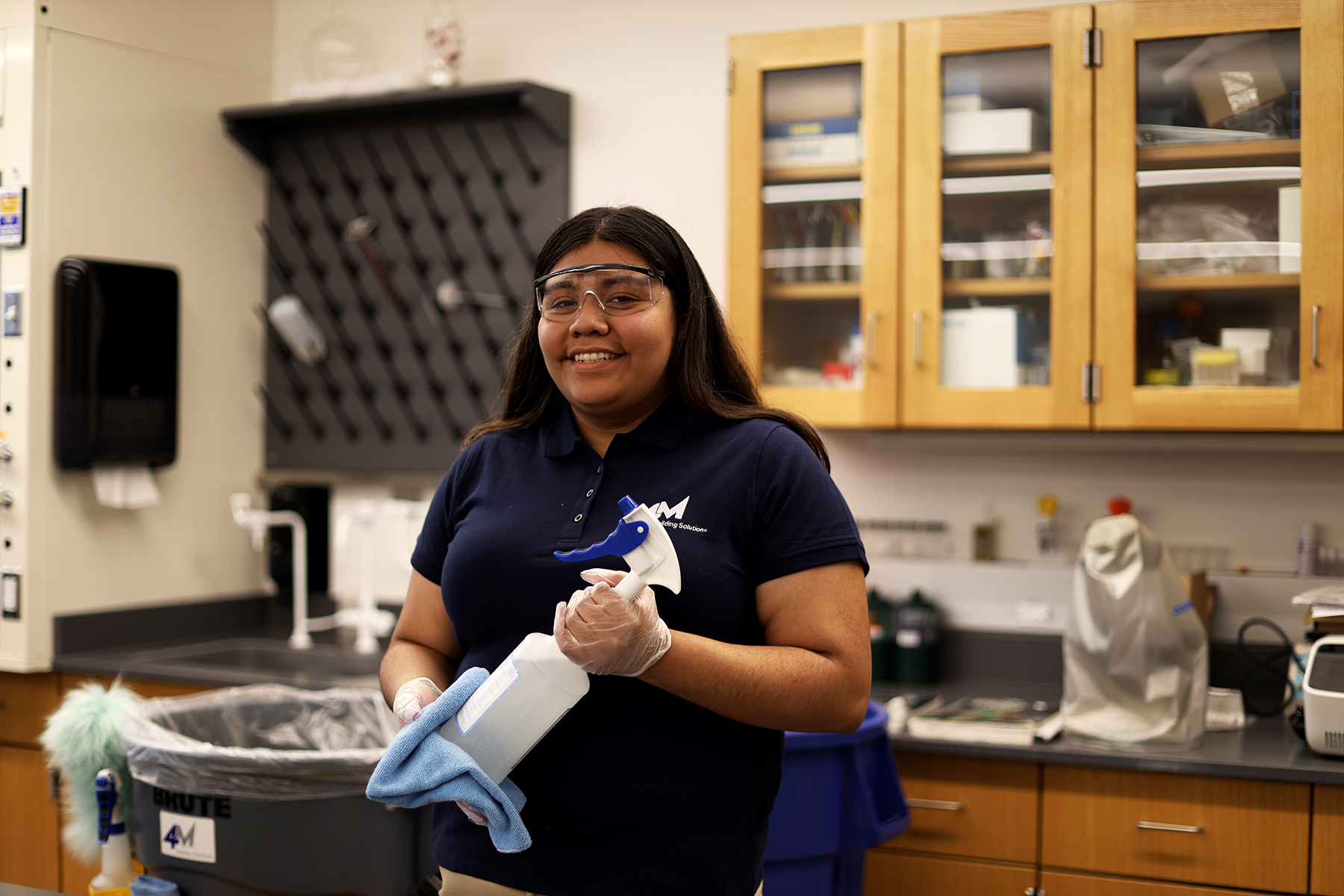
If you manage or own a daycare, you know your building isn’t like other buildings. Choosing a daycare cleaning service is not quite the same as hiring a commercial cleaning vendor for a corporate office.
Young children sit and crawl on floors, touch surfaces at every height, and bring their hands to their faces all day. That makes infections spread more easily in childcare facility cleaning settings than in most other facilities. On average, young children can get 8–12 viral infections per year, especially in the first year of group care.
That means the commercial cleaning products, protocols, and paperwork that work in offices and other workplaces often aren’t enough in a daycare. So, what are the criteria that you need to consider when hiring a cleaning service for your daycare? That’s exactly what we’ll discuss in this post.
1. Child-Safe, Green-Certified Cleaning Products as the Standard
Product safety comes first because it matters most to your parents and local care center licensing bodies. Children’s bodies handle chemical exposure differently than adults’ bodies do. Even if a product is acceptable for adults, it can still pose a real risk for a toddler who touches a freshly treated surface and then puts their hands in their mouth.
You want to hire a professional daycare cleaning service that uses Green Seal or GREENGUARD certified cleaning products as the standard in every area children use, including classrooms, restrooms, play areas, nap areas, and food preparation zones. When you hire a commercial cleaning provider, ask for documentation of the specific child-safe cleaning products the provider uses.
2. Disinfection Protocols Specifically Designed for High-Touch Surfaces
In an office, most high-touch surfaces are at desk height. In your daycare facility, many of the most important ones are close to the floor. Children sit and crawl on floors, open lower cabinets, dig through toy bins, reach into cubbies, rest on nap mats, and lean against the bases of furniture. Many commercial cleaners not accustomed to working in child care centers could treat these areas as secondary.
Your provider should have documented daycare disinfection protocols for child-height and floor-level surfaces, and for door handles, light switches, and restroom fixtures. Contact time matters just as much here as it does in healthcare. If a disinfectant is wiped off before the EPA-required contact time has passed, it isn’t disinfecting, whatever the label says.
3. Experience in Licensed Childcare and Education Environments
Industry-specific experience is non-negotiable when hiring a cleaning service for your daycare. If a provider mostly serves corporate offices, they will tend to clean a children’s space the way they clean an adult workplace. That leaves gaps in surface coverage, product choices, and documentation, and licensing inspectors notice them.
Ask directly whether the provider has current clients in educational facilities like licensed childcare, preschool, or K-12 settings, and ask for references from those clients. When you hire a provider with a proven education cleaning service track record in K-12 schools, their team brings sanitation standards, surface priorities, and schedule coordination that carry over directly to your facility’s cleaning.
4. Cleaning Schedules That Work Around Nap Times, Meals, and Activity Periods
As a childcare center manager, your day runs on a tight schedule. Fixed nap windows, mealtimes, and outdoor play periods decide when cleaning can happen and in which rooms. If a cleaning service can’t fit into that routine, it will either interrupt the children’s activities or skip rooms when the timing doesn’t work.
Be sure to hire a professional daycare janitorial service that builds its program around your schedule. Look for a daycare cleaning schedule that sets a cleaning window for each room type, timed so the cleaning team is never working in a room while children are using it.
5. Staff Screening That Meets the Same Standards as Your Own Hiring Process
Facility managers often overlook staff vetting when they compare commercial cleaning vendors, but who comes into your center matters a great deal. Cleaning staff share space with the children in your care, sometimes during early drop-off or late pick-up when schedules overlap.
Every team member who enters your facility should have passed a comprehensive daycare cleaning staff background check. In a licensed childcare facility, this isn’t optional, and you should get confirmation in writing before the contract begins. Ask the cleaning provider what their background checks cover and whether anyone could be placed at your facility before finishing it.
6. Documented Quality Inspections That Support Licensing Compliance
State licensing agencies review sanitation and cleaning standards during inspections. If you can’t produce records of your cleaning protocols, product usage, and inspection history, you start those reviews at a disadvantage.
Make sure the professional provider you hire gives you daycare cleaning documentation, including service records and cleaning inspection reports, so you can hand them over without scrambling. The right on-site management model includes continuous quality assurance with documented inspection records for each service cycle. Those records support your own cleaning compliance.
7. Illness Outbreak Response Capability
Childcare facilities deal with outbreaks of norovirus, RSV, hand-foot-and-mouth disease, and influenza again and again. When one hits, you need enhanced disinfection for your childcare support right away, not after a scheduling delay.
The right illness outbreak cleaning service has a documented response protocol that uses EPA-registered, broad-spectrum disinfectants, and it can mobilize quickly when you call. Ask each prospective provider to walk you through their process for daycare illness outbreak cleaning. Find out how quickly they can respond and what additional services they offer beyond your regular cleaning scope.
8. Transparent Communication With the Facility Director
If you can’t reach your cleaning supervisor when a problem comes up, you have a scheduling arrangement, not a cleaning partner. At a minimum, you should have a named on-site supervisor or account manager, a set response time for questions and concerns, and regular check-ins between the cleaning team and your leadership.
The right provider assigns on-site cleaning management to every account. That means one specific person is always reachable and responsible for service quality at your facility.
How 4M Supports Childcare and Education Facilities
At 4M Building Solutions, we offer an education cleaning program that covers K-12 schools and educational facilities nationwide. Our protocols are built around the health and safety needs of your space where children are the primary occupants. Every one of our educational facilities cleaning programs includes:
- Green-certified products through the Greenpath program
- GREENGUARD-certified cleaning products
- CDC- and OSHA-aligned disinfection protocols
- Background-screened team members
- On-site management at every account
- Documented quality assurance at each service cycle
Choose the Right Daycare Cleaning Service for Your Facility
Your cleaning service is more than a background function. It’s a health and safety decision that parents trust you to make well. Licensing agencies review it during inspections, and it affects how often illness spreads through your daycare facility. The eight criteria above give you a practical standard for childcare facility cleaning that you can hold any professional provider to. If your current provider can’t meet them, have that conversation before your next inspection cycle.
Want to see how your current service measures up? Contact us to talk through your facility’s needs and learn what dependable daycare janitorial service can look like for your center.