
8 Areas That Need Extra Attention After Construction Is Complete
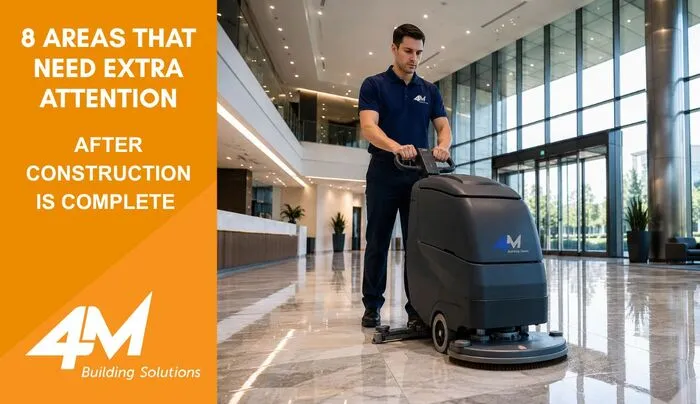
Construction crews are gone, the build-out looks great, but your building isn’t ready yet. What they leave behind is invisible to a casual walkthrough: fine construction dust buried in HVAC vents, adhesive residue on glass, grout haze on tile, and construction film on brand-new floors. Standard commercial cleaning won’t catch it. Post-construction cleaning is a different discipline entirely, and the difference shows. Miss these areas and you’re handing over a building that looks finished but isn’t. And, guaranteed, it will reveal its problems the moment people move in.
Here are the eight areas that need specialist attention before your after-construction cleanup is truly complete and your space is occupant-ready.
1. HVAC Vents, Ducts, and Air Diffusers
Construction creates extremely fine dust from drywall, concrete, timber, and joint compound. That dust travels and settles in HVAC vents, return air grilles, and air diffusers, even when the system is not running.
When you turn on the air, leftover dust can circulate through the building. You can see it as a haze on desks and windowsills. Poor indoor air quality can lead to irritated eyes, scratchy throats, and a general “new build smell” that does not go away.
Maintaining indoor air quality matters in every building, but even more so in healthcare, education, and senior living, where it’s linked to policy, audits, and occupant wellbeing.
What You Do: Ask for targeted cleaning of air diffusers, vent covers, and surrounding surfaces as part of the full post-construction cleanup.
2. Hard Floors and Floor Finishes
Floors take the biggest beating during a build as trades drag ladders, trolleys roll through grit, and adhesives and paint land where they should not. To make things worse, fine dust settles into the texture and grout lines. That makes even brand-new flooring look dated before move-in.
You may need:
- A deep scrub to remove film and grit
- A strip and recoat for VCT floor stripping and refinishing
- Edge work so corners match the open areas
- A final polish so the floor looks consistent under bright lighting
If you skip this, the dust may get locked under a finish, create swirl marks, and shorten the life of the floor. You also risk a poor first impression in the lobby, corridors, and boardrooms.
What You Do: Book post-construction floor cleaning with a company that has the right training and equipment to handle your floors.
3. Windows and Interior Glass
Glass windows and interiors make your new space feel open and premium, but it also shows every mistake left behind by the crew. The construction residue you see on glass typically includes:
- Paint overspray
- Caulk smears
- Adhesive residue from labels and protective film
- Dust stuck to silicone lines
- Fingerprints on partitions and doors
Given the mess, after construction, interior glass cleaning requires more than a quick wipe. If you use the wrong blade or chemical, you can scratch glass or leave haze that looks worse in sunlight.
What You Do: Ask for a thorough and professional post-construction window cleaning that includes detailing around frames, edges, and tracks.
4. Restrooms and Plumbing Fixtures
Restrooms get used hard during a project. Even if the construction crews try to keep things tidy, you still end up with:
- Dust on ledges and partitions
- Grout haze on tiles
- Caulk residue around basins and mirrors
- Water stains on taps and stainless steel
- Debris in corners and around toilet bases
A regular cleaning can make it “look okay” until the lights hit the tile at an angle. Then the haze and smell appear. And since restrooms make first impressions, if it looks half-finished or dirty, they assume the rest of the building is the same.
What You Do: If you want to keep the complaints in check, schedule a professional restroom cleaning after construction with a focus on fixtures, touchpoints, and tile and grout.
5. Light Fixtures, Baseboards, and Trim
Construction dust hides high and low, and it settles:
- On light fixtures and lenses
- Along baseboards and skirting
- On door frames, trim, and ledges
- On ceiling diffusers and grid edges
These areas are easy to miss because they are not at eye level. But once people move in, they notice the dust line straight away. Dust on light fixtures can also reduce brightness, making your “new” space feel dull.
What You Do: Add high dusting after construction and also edge detailing to your checklist, not just floors and benches.
6. Cabinets, Counters, and Built-In Casework
New cabinetry, countertops, and built-in casework look perfect until you open them. Inside cabinets and drawers, you can find sawdust, screws, and packaging fragments. On the outside, you can see:
- Installer fingerprints
- Adhesive marks from labels
- Sealant residue
- Fine dust on shelves and hinges
Countertops also carry a film from grout, caulk, or protective coverings. If someone starts using any of this furniture before you clean it properly, that residue spreads fast and becomes harder to remove.
What You Do: Request cabinet cleaning after construction that covers interiors, shelves, and hardware, plus safe wipe-downs for benchtops.
7. Carpets and Soft Flooring
Even when your carpets and soft tiles are brand new, construction dust can bury itself deep in their fibers. While a standard vacuum can lift surface grit, it does not pull out the finer particles that affect:
- Appearance and color clarity
- Odor and “stale” feel
- Indoor air quality when people walk through
If you used protective coverings during the construction, that helps, but dust still gets in at edges, seams, and transitions. You need a better post-construction carpet care plan.
What You Do: Plan a professional carpet deep cleaning service that includes extraction where needed, not just vacuuming. Remember, you need a deep clean that will make the carpet or soft flooring feel like new.
8. Exterior Entry Points and Common Areas
You can do a perfect post-construction cleanup inside your new space and still lose the first impression at the front door. That’s because construction traffic leaves:
- Concrete dust on footpaths
- Mud tracks through entry mats
- Debris near loading docks
- Marks on doors, push plates, and glass
- Grime build-up in lobbies and lift areas
If you run a multi-tenant building, shared zones will also require a thorough post-construction cleanup. They set the tone for everyone who walks in. In industrial and warehouse sites, entry areas also contribute to safety because dust and grit can turn into slip hazards.
What You Do: Add post-construction exterior cleaning and pressure washing to your plan for all entrances, exits, and high-traffic approaches.
Make Your Building Truly Occupant-Ready
At 4M Building Solutions, post-construction cleaning is a defined process, not a deeper version of our regular service. Our crews are trained specifically for construction residue, equipped for every floor and surface type, and accountable to a checklist that covers every area above. Whether you need a full post-construction cleanup or targeted construction cleanup services for specific areas, we’ll tell you exactly what your building needs before anyone walks in. Get it right the first time. Contact us to schedule a walk-through.