
8 Facility Problems That Special Cleaning Services Can Help Prevent
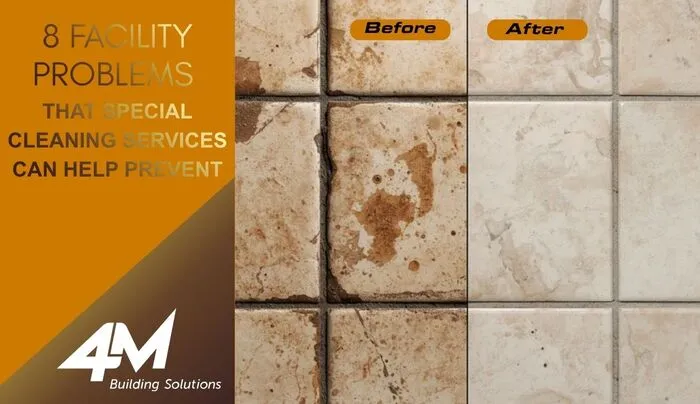
Routine janitorial cleaning keeps your building presentable, but it was never designed to protect it. If you manage a commercial facility, you already have daily cleaning covered. What many facilities often miss is a layer of specialized services that targets the areas your regular program doesn’t reach: elevated surfaces, floor finishes, exterior buildup, grout lines, and construction residue. If you skip these long enough and the problems compound, complaints rise, finishes deteriorate, and you’re looking at repair and replacement costs that a simple prevention plan would have avoided.
That’s where special cleaning services come in. Built into your facility strategy, they protect your asset, reduce risk, and keep your building performing the way it should. Here are eight common problems they help you prevent.
1. Poor Indoor Air Quality That Affects Occupant Health
Dust does not stay put. It collects on high ledges, beams, vents, ceiling tiles, light fixtures, and the tops of cabinets. Then, airflow and foot traffic push it back into circulation.
If your occupants complain about allergies, headaches, or “stuffy” rooms, the issue can typically be linked back to buildup in places you rarely see, but your HVAC system constantly pulls from. In healthcare, education, and senior living, poor indoor air quality is more than a comfort issue. It’s a compliance and liability exposure that shows up in audits and inspection reports.
With a planned high-dusting service, you can remove debris from elevated surfaces before it spreads. It can also help boost HVAC performance because supply and return areas remain cleaner.
When you treat high-dusting as part of commercial facility cleaning, you reduce the dust load that can trigger respiratory complaints, and you create a more comfortable workspace.
2. Premature Floor Damage and Costly Replacements
Hard floors take daily abuse. Grit at entrances acts like sandpaper while moving chairs and desks scratches the finish, and spills soak into worn areas. Daily mopping sure helps, but it cannot restore the protective layer that keeps your floor from becoming dull, porous, and harder to maintain.
If your floors look “clean but tired,” you may need more than routine janitorial cleaning. Periodic commercial floor stripping and waxing helps you remove old finish and embedded soil, then rebuilds protection.
That protection helps your floor resist scuffs and staining, and it can add years of life to your investment. You also reduce the time your team spends fighting marks that will not come out because the finish is already compromised.
3. Mold, Mildew, And Bacterial Growth On Exterior Surfaces
Exterior grime is not just an appearance problem. Mold, mildew, algae, and organic buildup can hold moisture on surfaces and speed up damage that may not be visible.
On sidewalks, loading docks, and entrances, that growth can also create slick spots that increase slip and fall risks. Regularly pressure washing your commercial facility can help remove buildup before it becomes a bigger issue.
It also helps your property maintain its curb appeal to tenants, visitors, and customers. If you manage a multi-tenant building, curb appeal is part of tenant retention. If you run an industrial site, clean walkways and docks will provide a safer operation and a better first impression for auditors and guests.
4. Tile and Grout Becoming a Hygiene Risk
People notice a restroom that looks shabby, even if it’s technically clean. And in a commercial facility, that perception becomes your reputation. While routine mopping is your answer, it can move dirty water across grout and push contaminants deeper. That’s because grout lines are porous, and they trap soil in a way tile does not.
Over time, grout discoloration becomes stubborn, and odors can appear in restrooms, locker rooms, kitchens, and break areas. You need a smarter restroom cleaning plan that offers more than routine tile cleaning services.
It should remove the embedded buildup that daily cleaning leaves behind. In healthcare, education, and senior living, grout cleanliness is directly tied to inspection readiness and a visibly stained restroom raises questions about what else isn’t being maintained.
5. Upholstery That Becomes an Allergen and Odor Source
Your furniture can be working against you. You just don’t know it yet. Soft surfaces quietly collect a lot of debris. For instance, lobby chairs absorb body oils, fabric panels hold dust, and your conference room seating traps dander and odors. Since the daily commercial cleaning routine focuses on floors, trash, and touchpoints, upholstery can go months or years without a real reset.
The problem isn’t just aesthetic. Contaminated upholstery recirculates allergens every time someone sits down, and odors that seem faint to staff are the first thing a visitor or prospective tenant notices walking in.
With a scheduled commercial upholstery cleaning, you can pull out embedded soil, treat spots, and reduce odor sources. It also extends the usable life of your furniture, which costs real money to replace.
If you manage a healthcare facility or senior living facility, this matters even more because upholstery sits close to occupants and can become an overlooked hygiene issue.
6. Dirty Windows That Reduce Natural Light and Curb Appeal
Windows can make your building feel bright and modern, or tired and neglected. Natural light is one of the most valuable features in any commercial space and dirty windows are quietly killing it. Film buildup, mineral deposits, fingerprints, and streaking all reduce natural light. Studies consistently link natural light to productivity, mood, and tenant satisfaction, making window maintenance a facilities decision with a real occupant impact, not just a cosmetic one.
This means you will need to schedule periodic interior and exterior window cleaning. Interior glass collects smudges and dust, especially near entry doors and common areas. Exterior glass takes on pollution, hard water spotting, and weather-related grime. Each side needs the right tools and methods, and upper levels may need lifts or specialized access.
7. Hidden Contamination After a Deep-Use Period or Season Change
Some buildings go through cycles. The challenge is that heavy-use periods, in addition to creating a visible mess, can push soil, debris, and contaminants into areas your daily program was never designed to reach. Under furniture, behind appliances, inside fixtures, and along baseboards, buildup accumulates quietly until it affects air quality, odor, and the overall condition of your space.
Whether you manage a school between semesters, a commercial office after a major tenant transition, or a warehouse coming off a peak shipping period, the pattern is the same: surfaces look acceptable but the baseline has shifted. The answer is a scheduled post-season deep cleaning. This can help you reduce complaints and create a cleaner baseline for your daily cleaning service to maintain.
8. Construction Residue That Lingers After Renovations
Renovations and build-outs leave behind a mess that regular cleaning services cannot address. It typically includes fine drywall dust that’s settled onto every surface and can drift into vents.
Adhesive residue and protective films also create sticky areas that trap dirt. If you reopen your office or building without the right cleanup, you can face weeks of complaints, dirty-looking floors, and dusty surfaces that keep returning.
The best way to avoid that is professional post-construction cleaning. However, it requires trained crews, the right filtration and vacuums, and a step-by-step approach. In other words, you will have to bring in a professional who can remove fine particulates, detail edges and fixtures, and set a clean baseline for your ongoing program.
Final Thoughts: Turn Special Cleaning into A Prevention Plan
The common thread among these eight problems is that they are all predictable and preventable. They follow predictable patterns when specialized work never makes it onto the schedule. When you treat special cleaning services as part of your facility strategy, you protect floors, improve comfort, reduce risk, and keep your building looking the way you want it to look.
4M Building Solutions works with facility managers across the country to build cleaning programs that go beyond the daily routine. We provide everything from high-dusting, floor care, and pressure washing to tile and grout, upholstery, windows, deep cleaning, and construction cleanup, which are coordinated around your schedule and facility needs.
If you’re ready to stop reacting and start preventing, contact us to schedule a walk-through.
Contact us today to schedule your walk-through.