
How to Build a Cleaning Program That Meets OSHA Workplace Sanitation Standards
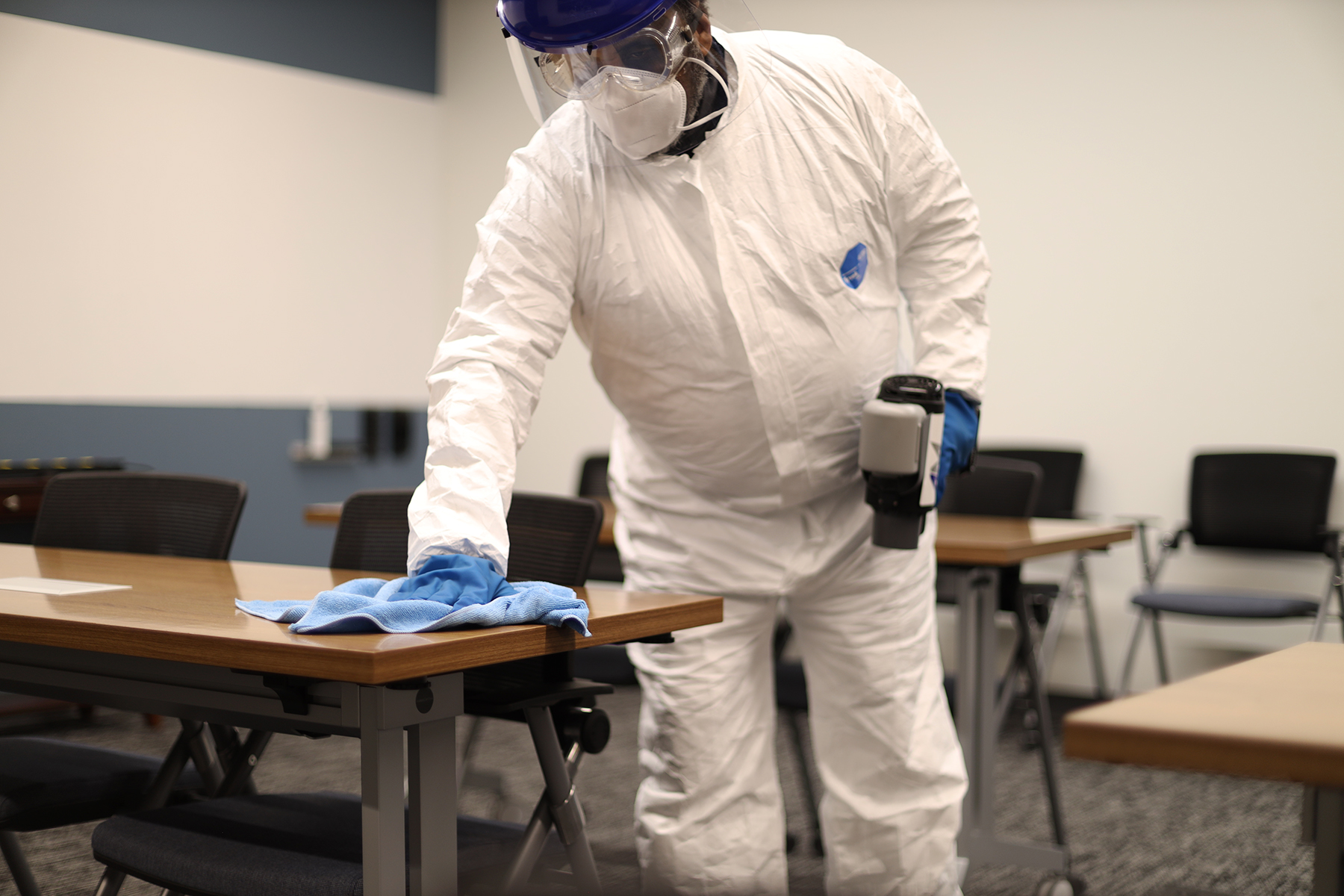
| Quick Answer: OSHA workplace sanitation standards are enforceable federal requirements that apply to most commercial and industrial workplaces in the United States. Several standards, such as 29 CFR 1910.141, 29 CFR 1910.1030, and CFR 1910.1200, cover workplace cleanliness, restroom availability and sanitation, drinking water, waste disposal, and employee safety. |
Keeping your workplace clean is more than just a matter of appearance. It’s also a legal responsibility. OSHA workplace sanitation standards require employers to maintain sanitary conditions, provide adequate restrooms and drinking water, manage waste properly, and protect employees from chemical and biological hazards. When your facility falls short, you may face regulatory citations, workplace hazards, and unnecessary liability.
Meeting these requirements takes more than a routine janitorial service. An effective OSHA cleaning program rests on four pillars: documented procedures, trained employees, appropriate cleaning products, and consistent inspections. Together, they turn cleaning from a daily chore into a system you can manage, measure, and defend.
This guide walks you through seven practical steps for building a cleaning program that supports OSHA compliance. It also explains what inspectors look for when they visit your facility, so you can be prepared before they arrive.
Step 1: Know Which OSHA Standards Apply to Your Facility Type
Your first step is identifying which OSHA standards apply to your facility type, as requirements for sanitation, drinking water, restrooms, and decontamination vary by industry. Reviewing the applicable standards before creating your cleaning schedule helps prevent overlooked responsibilities and compliance gaps.
| Standard | Facility Type | Key Requirements |
| 29 CFR 1910.141 | Most commercial and industrial facilities | Workplace cleanliness, drinking water, toilet facilities, and waste disposal |
| 29 CFR 1926.51 | Construction sites | Drinking water, restroom accessibility, and sanitation facilities |
| 29 CFR 1910.1030 | Healthcare environments | Bloodborne Pathogens standard, including specific cleaning and decontamination requirements |
For example, a manufacturing plant may need specialized procedures for handling industrial waste, while a medical office requires additional safeguards for potentially infectious materials. Your commercial cleaning program should consider these.
Step 2: Establish a Written Cleaning Program with Defined Frequencies
A written OSHA cleaning program provides structure, accountability, and consistency. OSHA requires workplaces to remain clean and sanitary. Although its general sanitation standard does not universally require a written janitorial schedule, documenting your procedures helps demonstrate how you maintain those conditions.
And there are certain standards, including the Bloodborne Pathogens standard, that explicitly require written cleaning schedules. This means your cleaning program should identify:
- Areas requiring cleaning and disinfection.
- Daily, weekly, and periodic cleaning frequencies.
- Approved cleaning products and application methods.
- Employees or vendors responsible for each task.
- Inspection procedures and documentation requirements.
Include restrooms, offices, break rooms, production areas, entrances, and shared spaces. For example, high-traffic entrances may require multiple cleaning visits throughout the day, while lower-traffic offices may need less frequent attention.
Another benefit of a documented program is that it sets clear expectations when evaluating commercial cleaning services and measuring vendor performance. It’s a great way to keep the pulse on your cleaning vendor’s effectiveness, because it tells you whether your vendor has a high staff turnover rate or a documented process.
Step 3: Address Restroom Sanitation to the Specific OSHA Standard
OSHA restroom sanitation requirements address both restroom availability and cleanliness. Under 29 CFR 1910.141, general industry workplaces must provide minimum toilet facilities based on employee numbers.
For example, workplaces generally need one toilet for 1–15 employees, two for 16–35 employees, and three for 36–55 employees. Additional facilities are required as employee counts increase, subject to the standard’s counting rules and exceptions.
However, providing enough restrooms is only part of compliance. Your restrooms must also remain sanitary throughout operating hours. You need an effective workplace restroom cleaning program that addresses toilets, sinks, countertops, floors, door handles, and frequently touched surfaces.
Daily cleaning is a practical starting point, but busy facilities may require several cleaning cycles each day. This includes periodic deep cleaning and regular inspections. You should also verify that soap, toilet paper, and appropriate hand-drying supplies remain available.
Finally, adjust your restroom cleaning frequency according to restroom traffic patterns rather than relying exclusively on a fixed schedule.
Step 4: Implement Waste Disposal Procedures That Meet OSHA Requirements
Proper waste management is essential for maintaining OSHA workplace sanitation standards. OSHA requires garbage and refuse to be removed frequently enough to maintain sanitary conditions. Waste receptacles must also meet applicable cleanliness and construction requirements.
Your procedures should distinguish between general refuse, regulated medical waste, and hazardous materials. For example, healthcare facilities handling contaminated sharps or other regulated waste must follow applicable Bloodborne Pathogens requirements. Industrial facilities may also need to follow EPA hazardous waste regulations.
Your OSHA cleaning program should document collection frequencies, approved containers, disposal methods, and responsible personnel. Clearly labeled containers and designated collection areas can make waste management safer and more organized.
Regular inspections help you identify overflowing containers, improper segregation, and sanitation concerns before they become bigger issues.
Step 5: Use EPA-Registered Disinfectants and Document Product Usage
Choosing the right cleaning products improves both workplace hygiene and employee safety. When disinfection is necessary, use EPA-registered disinfectants appropriate for the targeted microorganisms and surfaces. The EPA maintains several disinfectant lists, including List N for products effective against SARS-CoV-2.
OSHA does not universally require List N products for routine workplace cleaning. Your product selection should reflect the applicable workplace hazards, regulatory requirements, and relevant CDC guidance. Always follow the manufacturer’s approved label instructions.
Important factors include:
- Correct product dilution.
- Appropriate application methods.
- Required surface contact time.
- Compatibility with the surface.
- Necessary personal protective equipment.
For example, applying disinfectant and immediately wiping it away may reduce its effectiveness if the required contact time has not elapsed. Your OSHA cleaning program should document products, concentrations, application procedures, and applicable disinfection requirements.
Professional commercial cleaning services provide trained Cleaning Specialists who follow applicable CDC and OSHA guidelines. They help you maintain consistent disinfection practices while supporting a safer workplace.
Step 6: Train Every Cleaning Team Member on Applicable Safety Standards
Even a carefully designed cleaning program can fall short without properly trained employees. OSHA’s Hazard Communication Standard (29 CFR 1910.1200) requires training for employees exposed to hazardous workplace chemicals, including applicable cleaning chemicals and disinfectants. Training must address chemical hazards, protective measures, labels, and access to Safety Data Sheets (SDS).
Your training program should also cover:
- Safe chemical handling and storage.
- Proper use of personal protective equipment (PPE).
- Emergency response procedures.
- Chemical labeling and GHS hazard information.
- Safe equipment operation.
- Procedures for reporting unsafe conditions.
Employees working in healthcare environments may require additional training under OSHA’s Bloodborne Pathogens standard. Be sure to keep training records to support accountability and demonstrate your facility’s safety management practices. Your vendor’s team should also undergo regular refresher training, and supervisor oversight can also strengthen your program as workplace conditions change.
Step 7: Build Inspection and Documentation Into the Program, Not Onto It
A successful OSHA cleaning program requires regular inspections and reliable documentation. Rather than treating recordkeeping as an additional administrative task, incorporate it into your daily cleaning operations. Maintain records covering cleaning completion, chemical usage, employee training, inspection findings, and corrective actions.
Not every record is specifically mandated by OSHA’s general sanitation standard. However, organized documentation helps demonstrate consistent practices. It also plays a critical role in cleaning inspections and OSHA audits.
Therefore, your supervisors should regularly inspect completed work and document deficiencies. For example, if an inspection identifies an improperly cleaned restroom, record the issue, corrective action, and completion date.
What OSHA Inspectors Look for in a Workplace Cleaning Program
OSHA inspectors evaluate whether your workplace cleaning program meets applicable sanitation and employee safety requirements. During an inspection, relevant evidence may include your cleaning procedures, restroom conditions, waste handling practices, and chemical safety measures.
Your well-organized OSHA cleaning program should make the following information readily accessible:
- Written cleaning procedures and assigned responsibilities.
- Restroom cleaning schedules and inspection records.
- Disinfectant product information and application instructions.
- Employee chemical safety training documentation.
- Waste collection and disposal procedures.
- Records of inspections and corrective actions.
These records help demonstrate responsible facility management, although specific documentation requirements depend on the OSHA standards applicable to your workplace.
How 4M Building Solutions Creates OSHA-Compliant Cleaning Programs for Commercial and Industrial Facilities
Maintaining OSHA workplace sanitation standards becomes easier when your cleaning partner understands your industry’s operational requirements. At 4M Building Solutions, we provide customized commercial cleaning programs for corporate offices, industrial facilities, healthcare environments, educational institutions, and senior living communities.
Our trained cleaning specialists follow applicable CDC and OSHA guidance, while our Precision-Grade Clean™ approach focuses on consistent cleaning quality. We also incorporate CleanPath workflow strategies to improve cleaning efficiency in industrial environments.
With more than 7,000 team members supporting facilities across the US, we offer cleaning solutions designed around different operational needs. Our team continues to provide daily environmentally friendly and compliance-driven cleaning to 250 million square feet of space in varied workplace environments.
Create an OSHA-Compliant Cleaning Program for Your Facility
Building a commercial cleaning program that meets OSHA workplace sanitation standards requires a written scope, documented restroom, and waste procedures, EPA-registered products, trained staff, and inspection records that can be produced on demand. Facilities that build these elements into their cleaning program from the start spend less time responding to citations and more time running their operations.
That’s where 4M Building Solutions comes in. With structured and dependable commercial cleaning services, we help you maintain a cleaner, safer, and more compliant workplace. Are you ready to strengthen your cleaning program?
Contact us today to discuss your facility’s sanitation requirements and develop a customized cleaning plan.